
By Martina Meyer
The kingfisher: a sign that you're on the right path
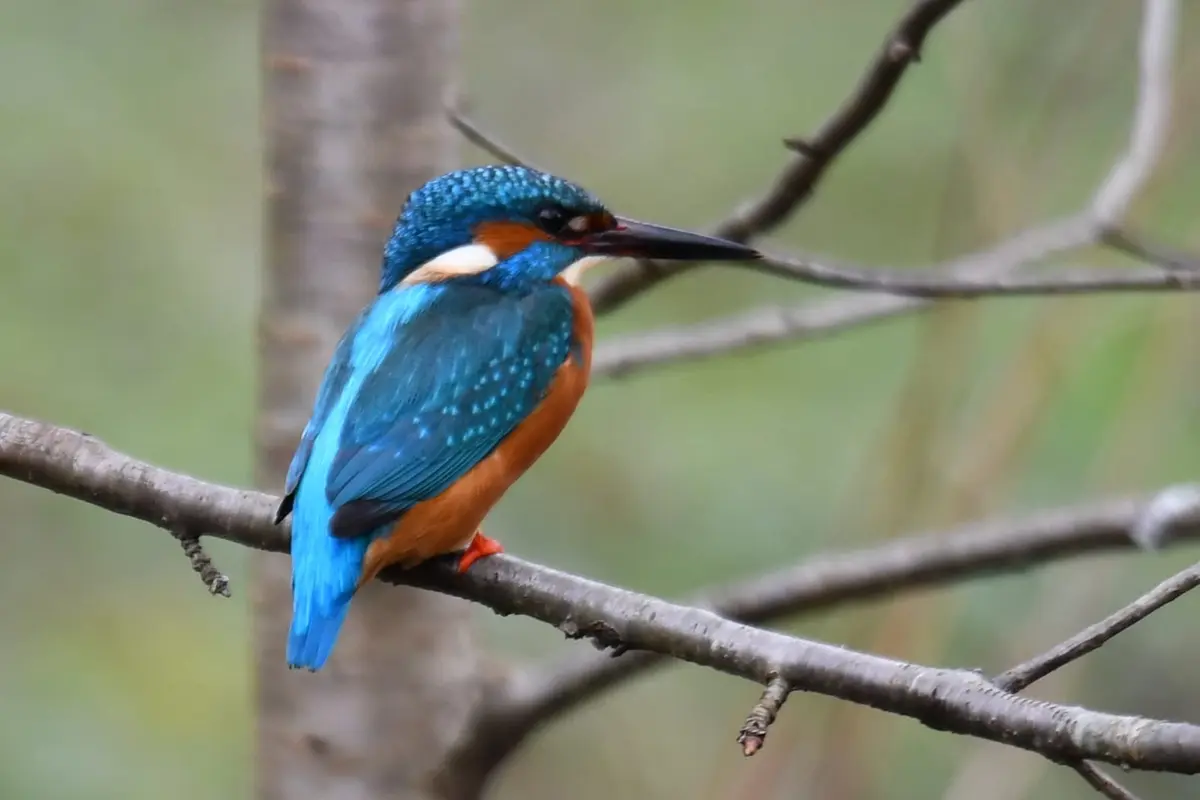
You can never be sure at the start. But when you set out on a new path and stay awake to it, life sends you small confirmations — a sign at just the right moment. You only have to be quiet enough to notice it. A kingfisher showed me this — on a day with ten kindergarten children.
How a kingfisher joined my first kindergarten tour
It was August 2019. I had arranged to lead a nature day for a kindergarten group — ten children, two teachers, and me. It was my first tour with children this young, and I was nervous. Would I even reach them? Would they listen?
We started at a large bridge over the river Erft, near Grevenbroich-Kapellen. I told the children that a kingfisher often sits in the old side-arms of the river behind the bridge — that small, brilliantly blue bird that hardly anyone ever gets to see. And that we would have to be completely quiet. We would creep up on it, I said, like little trackers on a trail.
And the children? Were as quiet as mice. No scolding needed, no pleading. They set off, utterly focused, eyes wide.
I walked in front, looked into the side-arm — and could hardly believe my eyes. There he was. On a branch reaching out over the water, in full splendour: the kingfisher. I waved the children over. The teachers had spotted him long before. And as if that weren’t enough, a second one suddenly flew up and settled beside him.
For me, that moment was a hint I couldn’t possibly miss. What lovelier confirmation could I have hoped for that this new work — showing children the natural world — was exactly right for me?
Why it’s the quietest ones who see the rare things
The kingfisher is shy. Many people who have walked along the Erft for years have never seen one. Ten kindergarten children saw two on their very first day.
Why? Because they did two things we grown-ups have often forgotten how to do: they aimed themselves — we were looking for the kingfisher, so everyone looked for him. And they became still. No chatter, no rushing, no half-thinking about something else.
That isn’t ornithology, it’s a basic law of attention: what you aim yourself at, you begin to see. Whoever talks the whole way and keeps checking the clock will miss the rare thing — literally. Whoever gathers themselves and grows quiet is shown what others walk right past.
And one more thing: I had told the children beforehand that we would find him. I spoke the intention out loud. That is no magic — but it aimed our attention, mine and theirs.
What this has to do with your fresh start
Perhaps you are standing at just such a beginning yourself. Something new, and you don’t yet know whether it will hold. And you are waiting for one big, unmistakable sign that tells you: Yes, this is right, keep going.
The big sign rarely comes. But the small ones come all the time — if you notice them. A kind word at just the right moment. A door that opens shortly after you knock. A coincidence that fits too well to be only coincidence.
There are two things you can learn from the kingfisher here:
- Aim yourself. Say where you want to go — quietly to yourself, or out loud to someone you trust. A spoken intention steers your gaze all by itself.
- Grow still, so you notice the answer. The confirmation is often already there. But whoever rushes and gets distracted walks right past it, like the passers-by who never see the kingfisher.
Your mini-exercise for today
Set yourself something for the coming week: every evening, write down a single sentence — one small sign of the day that tells you you’re on a good path. A kind word, a step that went well, an unexpected coincidence.
After seven days, read the list all at once. You’ll be surprised how many kingfishers were sitting around you — you simply hadn’t seen them yet.
Frequently asked questions
Isn’t a sign like that just coincidence? Perhaps. But that isn’t the point. It isn’t about whether something is being sent to you from outside — it’s about starting to notice what is already there. Attention changes what you see. And what you see changes how bravely you walk your path.
Do I have to “believe” in this for it to work? No. The exercise works because it steers your attention — not because it claims anything supernatural. You turn your gaze toward what is going well instead of toward your doubt. That alone changes a great deal.
How do I know a path might not be mine after all? When you look honestly for a long time and still find not one small confirmation — when everything feels heavy and empty, week after week. That, too, is an answer. A “no” from nature is just as valuable as a “yes”.
Where can I see a kingfisher myself? Along slow-moving or still waters with calm banks — side-arms, streams, ponds. Early in the morning is best, and winter is even easier, because the bare branches hide him less. And: be quiet. You often hear him first — a high, sharp whistle — before you see the flash of blue over the water.
Where to go from here
If you are standing at such a beginning and you’re missing someone to look with you at where your own signs lie — that is exactly what my free first conversation is for. About 30 minutes, at your own pace.
And if you’d first like something just for yourself: my Emergency Kit gives you five instant helps for moments when your courage wavers. It’s free, and you can open it for the first time tonight.
The kingfisher has shown me more over the years — I’ll tell those stories in the posts to come.